
The Reality and Research Behind Plantar Fasciitis Treatment
Do you feel heel pain when you wake up in the morning?
This article presents 3 steps you can follow to help with heel pain and plantar fasciosis for runners and people who regularly hike.
What is it?
The pain you feel in the arch or heel is caused by the weakness of the plantar tendon (figure 1).
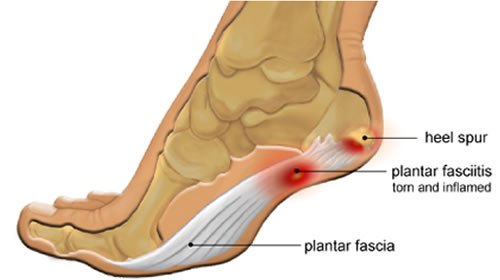
Cause: Lack of foot strengthening and inadequate blood circulation in the feet, caused by the abnormal position of the feet in high-heeled footwear, which places pressure on the arch and toes and holds them in an abnormal position.
Solution: First, strengthen the feet and restore and improve normal blood flow to the tendon, always keeping the feet in their natural functional and anatomical position (figure 2).
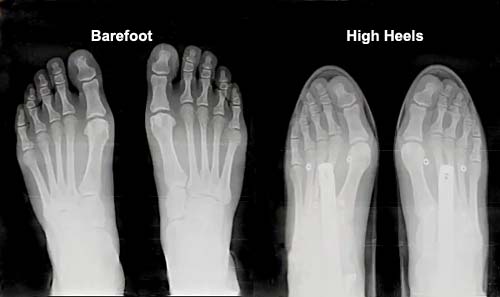
Do you wake up in the morning and feel heel pain? Do you often feel intense pain with your first step? Plantar fasciosis is the most common injury among runners who wear footwear for many hours. On the other hand, this problem does not appear in people who adopt barefoot running or in populations that do not wear footwear.
After 18 years of involvement and research among populations suffering from this condition, I have clarified some key guidelines that help resolve the problem. Wearing a brace to support the arch during the night provides relief, but it does not offer an effective solution to the root of the problem.
New research findings indicate that this is caused by degeneration of the plantar tendon, or Plantar Fasciosis, which is why the new name Plantar Fasciosis was introduced instead of Plantar Fasciitis. The main priorities should be strengthening the feet, increasing blood flow to them and restoring the anatomical position of the feet. All of the above require conscious consistency to truly resolve the problem in the long term.
Treatment:
Step 1: Stretching and relaxing the plantar tendon to increase blood flow
- Perform a regular downward stretch of the toes (Toe Extensor Stretch), as well as a downward stretch of the foot.
- Stretch the big toe away from the other toes.
- Relax the muscles of the foot by rolling on balls.
- Use very soft arch supports, such as ¾ Profoot Triad or Dr. Scholl’s Tri-Comfort, until the foot becomes stronger. This may take from weeks to months.
- Perform a deep muscle massage on the entire foot and leg every 3 days.
Step 2: Natural and anatomical positioning of the feet
- The main cause of poor blood flow to the tendon, and consequently its degeneration, is impaired circulation caused by the pressure that modern shoes place on the toes and arch (figure 3).
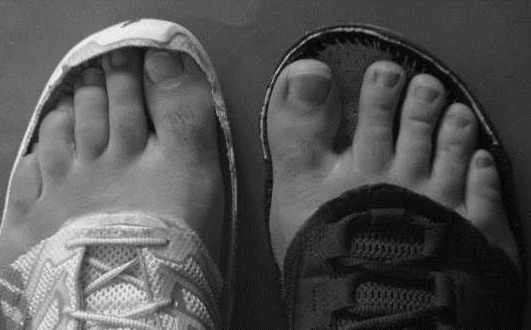
- Do not wear high-heeled shoes (elevated heel) with a narrow shape at the front (figure 3).
- Wear shoes that provide an anatomical position for your foot without a high heel.
- Wear shoes that allow freedom of movement in the feet and enable natural, functional movement of the legs.
- Use toe separators such as Correct Toes when walking or driving to improve blood flow and help prevent bunions.
- Wear a metatarsal support to help with toe alignment. Strengthen the foot with a wide support base through the toes.
Step 3: Strengthening and return to activity
- Start with 30 sec of walking or running barefoot on a soft surface such as grass, carpet or a treadmill. Every few days, you can add another 30 sec.
- During a regular workout, such as a 30-minute run in suitable sports shoes that allow the toes to spread naturally, you can also add one minute of barefoot running (29 min in shoes and 1 min running without sports shoes).
- Lift a backpack filled with sand using your toes and write the alphabet (advanced exercise).
- Pull a towel with your toes.
- The AFX channel below offers a wide variety of exercises: http://www.afx-online.com
- Balance on one leg.
- A) Perform balance exercises even while waiting in line, at home, at work or wherever you are.
- B) Try walking with your eyes closed—at the same time, try to create a wide support base with your toes, improving their functionality.
Note: The goal is for the foot to no longer need any support and for the leg to become strong and functional.
Be especially careful when walking barefoot on very hard surfaces; your feet will need time to adapt. Remember that the feet and arch have lost strength because of shoes, and restoring it will take time. Finally, cramps and spasms may occur due to the activation of different muscle groups.
Using a brace may relieve you during your first steps in the morning, but it is certainly not the solution to the problem.
Continue consistently strengthening your feet with barefoot running once a week.
In our experience, the most surprising thing is that doctors and podiatrists do not recommend strengthening and improving foot function to patients. Improving blood flow, combined with correct positioning and function of the feet, resolves the problem in the long term. People who adopt barefoot running do not develop plantar fasciosis because their feet are stronger and remain in a normal anatomical position. The traditional theory supported by most companies is that sports shoes offering support and cushioning support the arch and foot.
In general, the prevailing theory is that supportive sports shoes will do what our feet are designed to do. Ultimately, using supportive sports shoes weakens the feet and causes them to lose their mechanical properties. Additional support for the feet may temporarily relieve the problem, but the feet remain weak and their condition gradually worsens, meaning that more and more support is eventually required. Most people may feel relief at first, but over time the problem worsens and many stop using the support altogether.
In conclusion:
The tendency to support something that is not functioning properly is completely misguided and ineffective. For something to improve, we must make it effective and functional in the long term. Giving our feet an entirely natural and anatomical position is essential for restoring their normal function through functional strengthening.
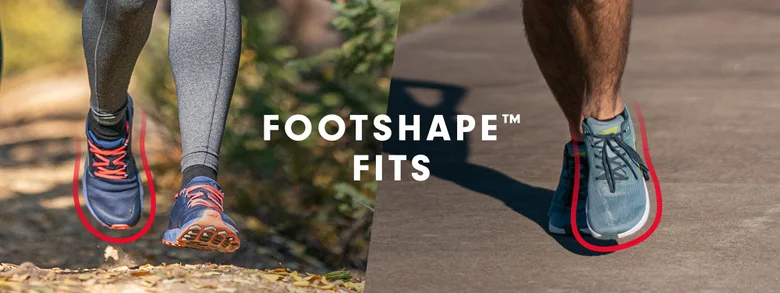
Altra footwear provides the ideal conditions of zero drop & foot shape toe box, with an entirely natural and functional position for the feet, allowing better blood flow and strengthening in a completely natural way.
More information:
Dr. Ray McClanahan on recent research on Plantar Fasciosis/Plantar Fasciitis
Translation editing: Kyriaki Mitrou, MSC

ΠΟΛΥ ΚΑΤΑΤΟΠΙΣΤΙΚΟ!
ΜΟΥ ΛΥΝΕΙ ΧΡΟΝΙΕΣ ΑΠΟΡΙΕΣ
ΑΝΑΓΝΩΡΙΖΩ ΛΑΘΗ ΠΟΥ ΕΧΩ ΚΑΝΕΙ ΣΕ ΟΛΗ ΜΟΥ ΤΗ ΖΩΗ (ΤΩΡΑ 74)