
What Is Creatine and What Is the Right Way to Take It?
Creatine is an organic compound made up of the amino acids arginine, glycine and methionine. Creatine plays an important role in the production of ATP (adenosine triphosphate), the cellular energy currency of our cells.
Creatine synthesis initially takes place in the pancreas and kidneys and is completed in the liver. Approximately 95% of the body’s creatine is stored in skeletal muscles.
Most of it is stored as phosphocreatine, while the remainder is distributed throughout the blood, brain and other tissues.
Five percent of creatine is found in the brain, kidneys and liver. Once consumed, creatine enters the brain to rapidly fuel its cells. This increased energy availability is associated with improved short-term memory and reasoning skills, especially in vegetarians and people experiencing high stress. In a study involving vegetarians, creatine led to a 50% improvement in a memory test and a 20% improvement in an intelligence test.
1. Benefits for Muscle Performance and Growth
Creatine helps with the resynthesis of ATP (adenosine triphosphate), the primary energy source for short, intense exercise. This leads to increases in strength, power and muscle mass.
2. Improved Cognitive Function
Creatine may improve cognitive function, particularly under conditions of stress or fatigue, such as sleep deprivation or low energy availability.
3. Support for Cardiovascular Health
Creatine contributes to reducing homocysteine levels, which are a risk factor for cardiovascular disease. At the same time, there is evidence that it may support heart function in cases of heart failure, as it appears to have positive effects on the strength and endurance of the heart in specific conditions.
4. Use by Endurance Athletes
Although creatine is better known for its effectiveness in power sports, it may also benefit endurance athletes. Increased energy availability in the muscles and improved recovery after training may support performance. Creatine may be particularly useful in events involving changes in intensity, such as cycling or long-distance running.
How much creatine does our body need?
Under normal conditions, our body needs 2–4 g per day. Of this amount, 1–2 g are produced endogenously, mainly by the liver, but also by the kidneys and pancreas, while 1–2 g are obtained from dietary sources, primarily fish and meat. Creatine is eliminated by the kidneys at a rate of 1–2 g per day in the form of creatinine.
Phosphocreatine is the “fuel” for our muscles during all maximum-intensity and maximum-speed contractions. It usually lasts for up to 8–10 seconds, while the body needs approximately three minutes for its complete resynthesis.
- Creatine is best taken after training, as at this point muscle tissue is more receptive to its absorption. For better absorption, it is advisable to take it together with simple carbohydrates (sugar, dextrose).
- Supplemental creatine intake increases the absorption of water from the surrounding tissues into the muscles (fluid retention). Particular attention should be paid to adequate fluid intake, especially during the loading phase or periods when athletes lose a lot of fluid (summer preparation). A general guideline for your daily hydration is to drink approximately 30–35 ml per kilogram of body weight per day. If you generally consume less, you should gradually increase your fluid intake to reach these levels.
Click here for simple guidelines regarding hydration and cramps.
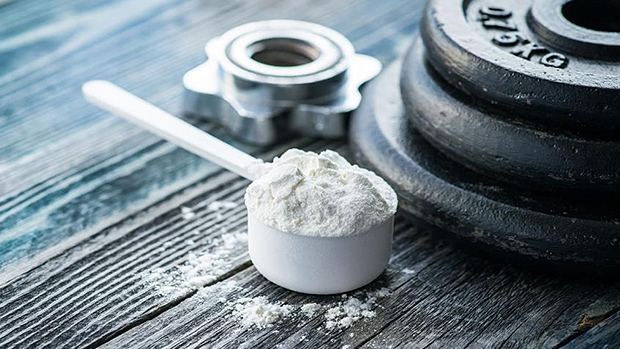
The correct way to take creatine is as follows:
With a loading dose:
- Loading phase: 0.3 g/kg/day (0.15 g/pound/day) for 5–7 days.
- Maintenance phase: 0.03 g/kg/day (0.015 g/pound/day) for maintenance.
In other words, an athlete weighing 75 kg will take 23 g for 5 days, followed by a daily dose of 2.5 g/day.
Creatine does not always need to be taken in cycles. However, if someone wishes to take creatine cyclically, it is advisable to use short cycles of 5–6 weeks. For example, 4 weeks taking it followed by 1 week off.
Also, during the “loading” phase, athletes should pay attention to their hydration. Due to the increase in phosphocreatine stores in the muscles, a small amount of fluid retention may also occur, which subsequently subsides.
Without a loading dose: Take 3–5 grams daily, depending on body weight. With this approach, phosphocreatine levels reach the same levels achieved with loading within 3–4 weeks.
Creatine monohydrate is one of the most popular and widely used sports nutrition supplements.
According to David Sandler, general manager at the National Strength and Conditioning Association (NSCA), “creatine allows you to achieve greater endurance during training, improving your ability to gain more muscle and definition, with increases ranging between 10 and 40%. By taking a creatine supplement, you improve both the anaerobic and aerobic performance of your body, helping you continue your programme with greater endurance and safety”.
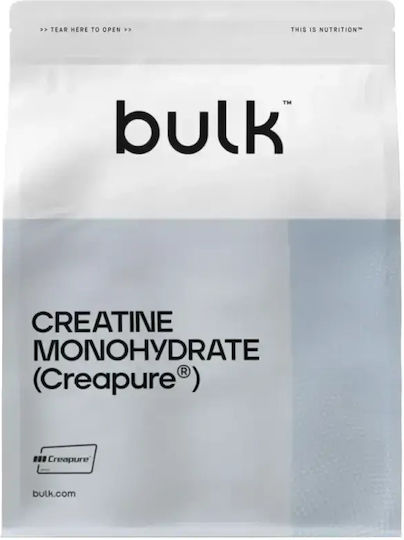
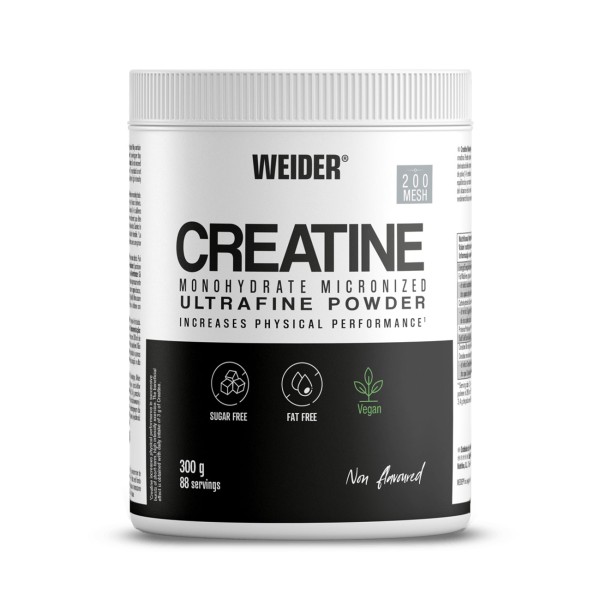
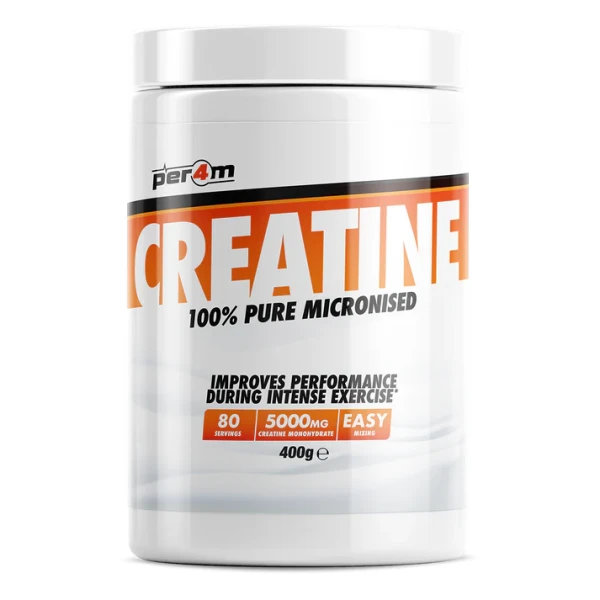
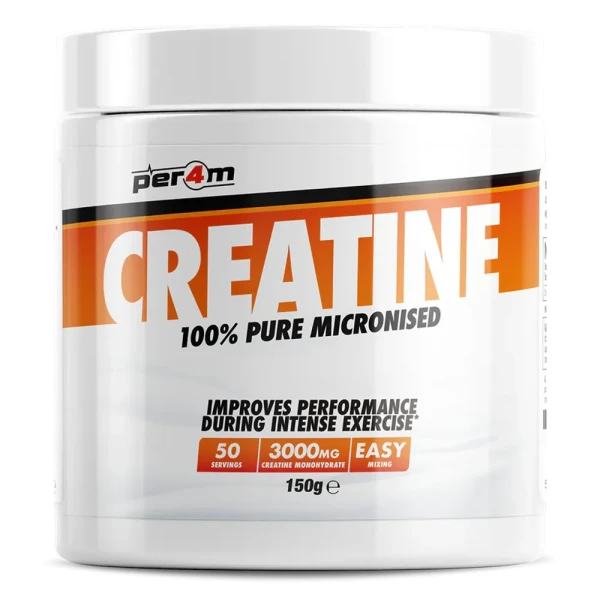
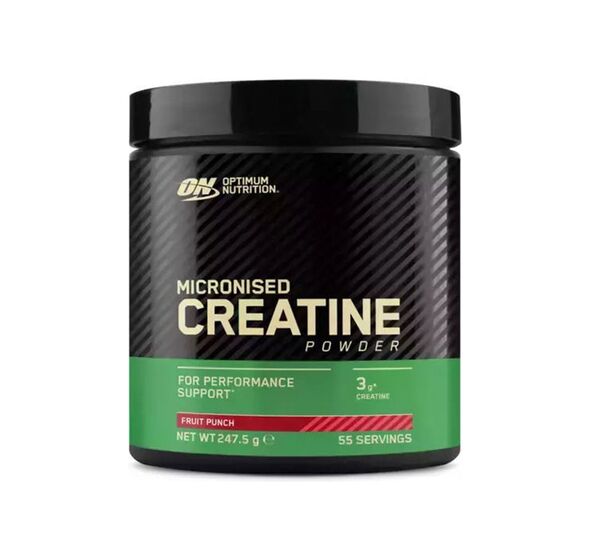
Find here the top creatine monohydrate products at the best prices on the market!
Creatine is also found in various foods. Examples include:
| Creatine content of foods | ||
| gr/lb | gr/kg | |
| Cod (fish) | 1.4 | 3.0 |
| Beef | 2.0 | 4.5 |
| Herring | 3.0–4.5 | 6.5–10.0 |
| Milk | 0.05 | 0.1 |
| Pork | 2.3 | 5.0 |
| Salmon | 2.0 | 4.5 |
| Tuna | 1.8 | 4.0 |
| Sole | 0.9 | 2.0 |
Source: Adapted from Williams MH, Kreider RB, Branch D. Creatine: The Power Supplement (p 15). Human Kinetics, Champaign IL, 1999.
Safety of use and possible side effects of creatine
Creatine is a dietary supplement that has been widely used and researched for many years. According to research, creatine supplements are safe for short- and long-term use in healthy males and females, as well as in younger and older individuals. For safe creatine intake, it is important to use it correctly in relation to dosage and, of course, to exercise particular caution in specific populations and individuals with health problems.
References:
Kreider, R. B., et al. (2017). “International Society of Sports Nutrition position stand: safety and efficacy of creatine supplementation in exercise, sport, and medicine.” Journal of the International Society of Sports Nutrition, 14(1), 18.
Rae, C., et al. (2003). “Oral creatine monohydrate supplementation improves brain performance: a double–blind, placebo–controlled, cross–over trial.” Proceedings of the Royal Society B: Biological Sciences, 270(1529), 2147-2150.
Wyss, M., & Schulze, A. (2002). “Health implications of creatine: Can oral creatine supplementation protect against neurological and cardiovascular diseases?” Neuroscience, 112(2), 243-260.
Mujika, I., et al. (2000). “Creatine supplementation and performance in endurance sports.” Medicine and Science in Sports and Exercise, 32(5), 1034-1042.
Cooper R., Naclerio F., Allgrove J., Jimenez A. Creatine supplementation with specific view to exercise/sports performance: An update. J. Int. Soc. Sports Nutr. 2012;9:33. doi: 10.1186/1550-2783-9-33. – DOI – PMC – PubMed
Wax, B.; Kerksick, C.M.; Jagim, A.R.; Mayo, J.J.; Lyons, B.C.; Kreider, R.B. Creatine for Exercise and Sports Performance, with Recovery Considerations for Healthy Populations. Nutrients 2021, 13, 1915. https://doi.org/10.3390/nu13061915

Καλημέρα σας, μπορείτε να στείλετε τις ερωτήσεις σας στο info@performnace-store.gr