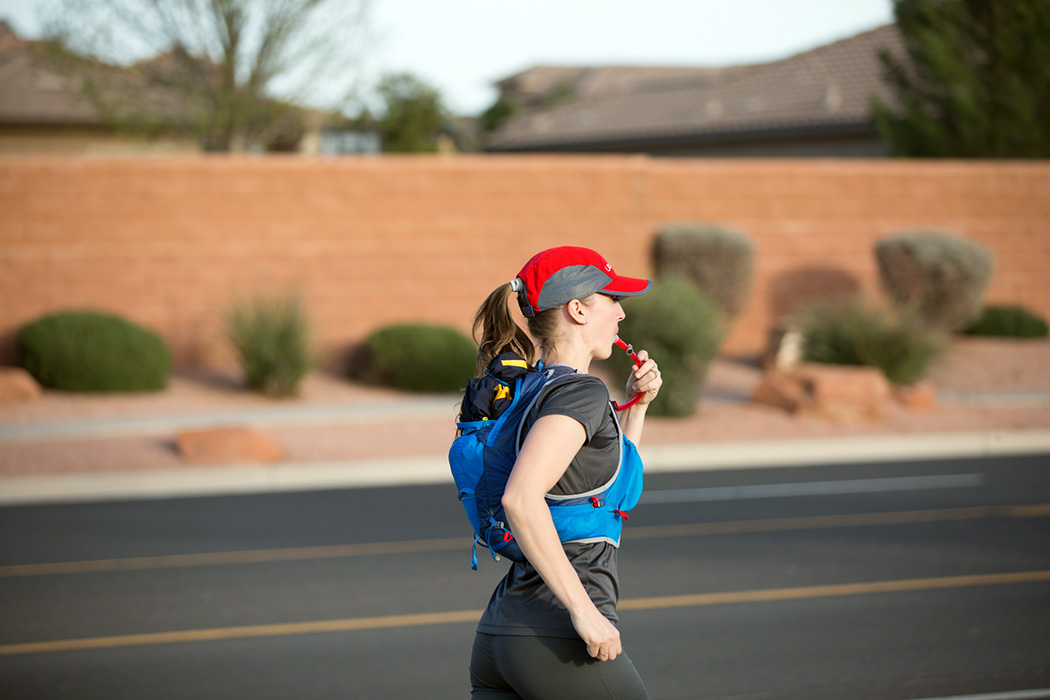
Athlete Hydration
In general, most athletes, under normal conditions, will meet their hydration needs by consuming 500–700 ml of fluids per hour. Athletes exercising in cool weather conditions or with a lower body weight can consume less fluid, while heavier athletes or athletes exercising in very hot and humid environments need more fluids.
Sweating is usually substantial and you lose quite a lot of fluid, but you cannot replace all the fluid you lose. For this reason, we use the term replenishment rather than replacement! Forget advice such as “drink as much as you lose” or “drink even when you are not thirsty”—it is simply wrong.
Dehydration is the greatest “enemy” of athletes participating in endurance events! Click here to see what you need to watch out for!
You should also know that excessive hydration can have negative effects (dilutional hyponatremia). Attention! Excessive fluid consumption (more than 900 ml of fluid per hour) reduces performance and increases the likelihood of muscle cramps. Excessive fluid intake is combined with a severe depletion of the essential electrolytes in the body, inevitably causing hyponatremia (low sodium concentration), which can even lead to death.
Heat, humidity and exercise intensity largely determine your sweating rate. Click here for tips on how to beat the heat.
A general guideline for your daily hydration is to drink approximately 30–35 ml per kilogram of body weight per day. This does not include the fluids you will need to replenish during training sessions, etc. If you generally consume less, you should gradually increase your hydration to reach these levels.
Measuring your fluid loss rate is essential and useful for determining how much fluid you lose per hour and planning your replenishment in the best possible way! This can be done very simply:
https://www.youtube.com/watch?v=RKoRpV99NWU&t=97s
Weigh yourself without clothes before training.
Train at the pace and temperature (as far as possible) of the event for 1–2 hours.
Weigh yourself without clothes after training (also include the fluids consumed during fueling).
For example, an athlete weighs 70 kg before a two-hour training session and 69 kg afterward, having consumed 500 ml per hour. We consider 1000 ml of water to be equal to one kilogram.
Therefore, 70 – (69 – 1) = 2 kg. This means that this athlete loses 1000 ml per hour!
Replenish the lost electrolytes.