
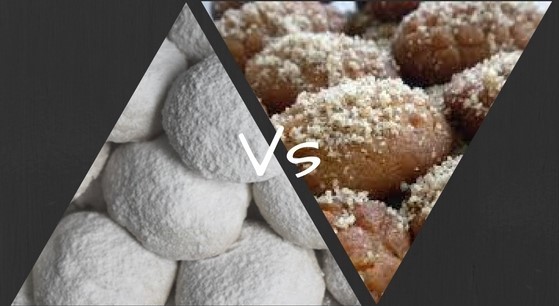
Kourabiedes or Melomakarona?
Kourabiedes or Melomakarona – Calories? The festive season has arrived once again. During the holidays, our mood changes and we increasingly give in to temptations. Kourabiedes and melomakarona are the most popular Christmas sweets, and during this short festive period we will be tempted to enjoy these treats and embrace the holiday spirit!
Let’s look at the calorie content of each sweet.
How many calories does a kourabiedes contain?
Kourabiedes (one regular piece) = 150–160 calories.
A kourabiedes contains an average of 11.7 mg of cholesterol and a considerable amount of saturated fat from the butter. However, if part of the butter is replaced with olive oil, its vitamin E content increases.
Traditional kourabiedes dough is made with butter, flour and sugar. The simpler the recipe, the healthier and more diet-friendly the result will be. If we want to reduce saturated fats, we can replace part of the butter with olive oil, and to reduce calories, use icing sugar instead of regular sugar.
How many calories does a melomakarono contain?
Melomakarono (one regular piece) = 200 calories per piece
The traditional recipe for melomakarona contains flour, oil, sugar and orange juice, as well as honey, walnuts and cinnamon for the syrup. Melomakarona are considered healthier than kourabiedes, as they do not contain saturated lipids. In addition, the recipe allows us to reduce calories by decreasing the amount of sugar and honey used for the syrup. They will also be less fattening if we reduce the walnuts sprinkled over them. On the other hand, honey, walnuts and cinnamon all contain important antioxidants, healthy fats (walnuts), and a variety of vitamins and minerals.
The winner: Although it has slightly more calories, the melomakarono is considered the healthier choice, as it contains less saturated fat and cholesterol.
Let’s eat without guilt!!
Happy holidays!!!
Author: Kyriaki Mitrou, M.Sc.
28/12/2019