
Hammer Extreme Endurolytes Sachet (3 capsules)
1,60 €
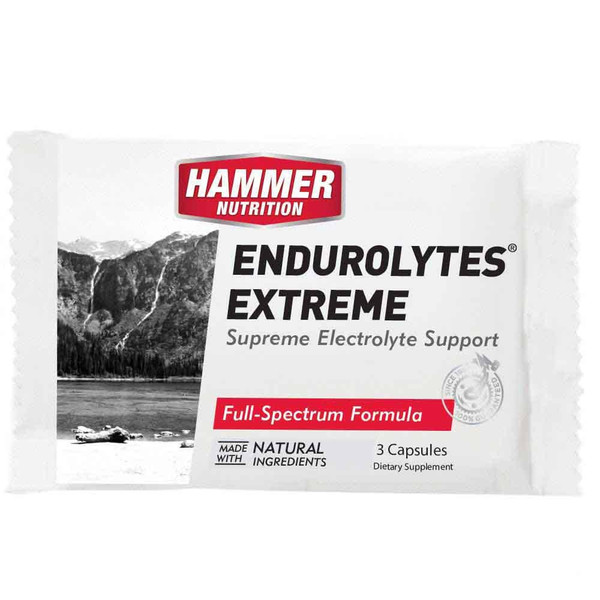
Hammer Extreme Endurolytes Sachet (3 capsules)
1,60 €
Designed for the toughest conditions, when higher amounts of certain minerals are needed. Each capsule provides 300 mg sodium chloride (salt) and 75 mg potassium, three times the amount compared with the original formula, while maintaining the correct 4:1 sodium-to-potassium ratio—another key difference of Endurolytes compared with any other product on the market!
- Superior protection against cramps
- Complete mineral profile – balanced formula
- Rapid absorption
- Triple sodium-potassium dose compared with classic Endurolytes

Recommended retail price:1,60 €
Store availability
Hammer Extream Endurolytes-Electrolytes
- Sodium – Derived from salt, which consists of 40% sodium.
- Chlorine – Derived from salt, which consists of 60% chloride.
- Calcium – Provided in “chelated” form, meaning that it is bound to one or more amino acids, usually glycinate (glycine) or aspartate (aspartic acid).
- Magnesium – Included in “chelated” form, meaning magnesium bound to one or more amino acids. These forms are used for maximum absorption.
- Potassium – Included in citrate form, bound to citric acid for maximum availability.
- Ginger Root – A natural anti-inflammatory and digestive aid.
Manganese – This trace mineral is necessary for optimal muscle cell enzyme reactions and for the conversion of fatty acids and protein into energy.
Extream EndurolytesExtream Endurolytes contain chelated (de-ironed) minerals. Chelation is the process of binding a mineral to another substance, ideally an amino acid, thereby making it more available. The advantage of chelated minerals is that they are absorbed more easily than their non-chelated counterparts. For example, magnesium is 87% more absorbable when chelated, but only 16% when taken in an inorganic, non-chelated form. Normal mineral absorption averages 10%! However, absorption of chelated minerals can be much higher, at around 60%.
Calciumcalcium is the most abundant mineral in the human body (approximately 1.5% of body weight).
Normal heart function, nerve impulse transmission and strong muscle contractions require a stable level of calcium in the blood. During exercise, calcium-dependent enzymes produce energy from fats and amino acids. When blood calcium is low, the body draws calcium from the bones, but this process cannot keep pace with your exercise rate. Calcium deficiency in the blood during endurance events can cause high blood pressure, muscle cramps and weakness.

Only logged in customers who have purchased this product may leave a review.



Reviews
There are no reviews yet.