
Hammer Endurolytes sachet (4 caps)
1,60 €
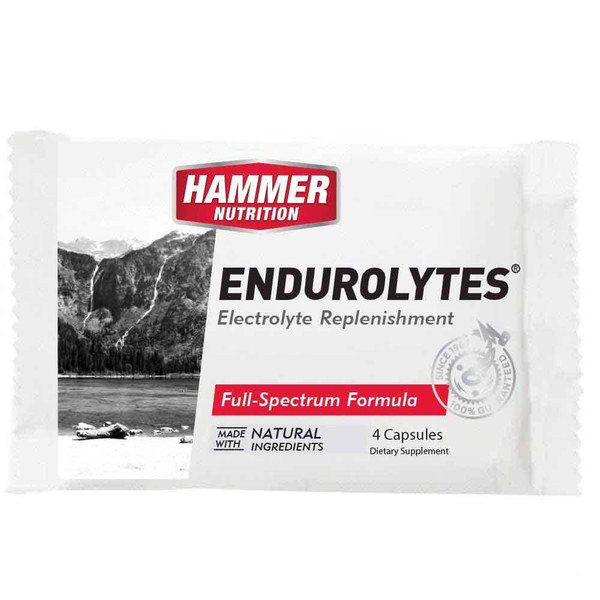
Hammer Endurolytes sachet (4 caps)
1,60 €
The secret is revealed…..why Endurolytes are the BEST electrolytes you could have!
- Superior protection against cramps
- Complete mineral profile – balanced formula
- Rapid absorption
- Adjustable dosage according to weather conditions

Out of stock
Endurolytes Minerals Hammer Nutrition
Endurolytes contain chelated (de-ironed) minerals. Chelation is the process of bonding a mineral to another substance, ideally an amino acid, making it more bioavailable. The advantage of chelated minerals is that they are more easily absorbed than their non-chelated counterparts. For example, magnesium is 87% more absorbable when chelated, but only 16% when taken in an inorganic, non-chelated form. Normal mineral absorption averages 10%! However, the absorption of chelated minerals can be much higher, at around 60%.
Calcium is the most abundant mineral in the human body (approximately 1.5% of body weight). Normal heart function, nerve impulse transmission and strong muscle contractions require a stable level of calcium in the blood. During exercise, calcium-dependent enzymes produce energy from fats and amino acids. When blood calcium is low, the body extracts calcium from the bones, but this process cannot keep pace with your exercise rate. Calcium deficiency in the blood during endurance events may cause high blood pressure, muscle cramps and weakness.
Magnesium
must accompany calcium at a 1:2 ratio. When calcium flows into muscle cells, the muscle contracts, then it is replaced by magnesium and the muscle relaxes. Many enzymatic reactions required to convert energy stores into muscular energy occur in the presence of adequate magnesium. Magnesium deficiency results in muscle cramps, spasms, sleep disturbances and, in some cases, seizure disorders.
Potassium is the main cation (positively charged ion) in all muscle cells. It is essential for maintaining optimal sodium concentration and balance. Symptoms of potassium deficiency include nausea, vomiting, muscle weakness, muscle spasms, cramps and tachycardia.
Sodium
is the main cation (positively charged ion) outside the cells. During endurance events, at least three to four hours are required to deplete this mineral, which may lead to symptoms including abnormal heart muscle function and hypoventilation. However, replacing sodium at or close to the same rate as its depletion overrides and inhibits the body’s hormonal regulatory mechanisms for maintaining electrolytes. Consuming too much sodium will cause a variety of problems, the least of which is fluid retention. Therefore, we strongly recommend more moderate sodium replenishment, which is also beneficial for the body.
Chloride
is the corresponding anion (negatively charged ion) that accompanies sodium. This electrolyte is absolutely essential for maintaining osmotic pressure in the blood and extracellular fluids. An appropriate amount of chloride (as sodium chloride) supports, but does not override, the function of the hormone aldosterone in regulating and maintaining appropriate electrolyte levels.
Manganese
is included in Endurolytes as it is necessary for optimal enzymatic reactions in muscle cells that convert fatty acids and proteins into energy. Again, fatty acids and proteins are a critical part of an athlete’s fuel supply, so while manganese is not technically an electrolyte, its importance cannot be overlooked.
Vitamin B-6
is required in 60 enzymatic reactions involving the metabolism of carbohydrates, fats and proteins.
L-tyrosine
is an amino acid added to the Endurolytes formula to protect thyroid and adrenal function. Blood plasma deficiency during extreme endurance events will reduce thyroid and adrenal production, which hinders the proper metabolic rate. Symptoms of L-tyrosine depletion initially appear as depression, later anger, and then malaise that develops into complete despair. If any of these have ever happened to you during demanding training or a race, it may be due to low thyroid and adrenal function. This can easily be avoided by consuming L-tyrosine through any of the Endurolytes products.
For more information about electrolyte replenishment, read here.

Additional information
| brand |
|---|
Only logged in customers who have purchased this product may leave a review.

Reviews
There are no reviews yet.